Quick Answer
What is the difference between passive and active investing?
Passive investing means buying and holding a diversified portfolio; usually through index funds or ETFs, designed to match the market’s overall performance over time.
Active investing means making deliberate decisions to buy and sell individual assets in an attempt to outperform the market. Passive investing generally carries lower fees and suits long-term wealth building, while active investing and active trading offer greater potential returns but require more skill, time, and risk management.
Many investors use a combination of both approaches depending on their financial goals.
Introduction to Passive vs Active Investing
There’s a question that comes up constantly among investors, whether they’re just getting started or have been watching markets for years: should you go passive or active? The debate around passive vs active investing has become one of the most important decisions anyone managing their own money will face. And the answer is not as clear-cut as the financial media often suggests.
Both strategies have produced winners. Both have produced losers. What actually determines outcomes is not which camp you belong to, it’s whether you understand what you’re doing and why you’re doing it. This post breaks down each approach, compares the real trade-offs, and helps you figure out what makes sense for your situation.
What Is Passive Investing?
Passive investing is exactly what it sounds like. You put your money into a fund designed to track an index, such as the S&P 500 or the ASX 200, and you hold it for the long term. You’re not trying to pick winners. You’re not timing the market. You’re simply buying a slice of the whole market and letting compounding do its work over time.
The most common passive investing vehicles include:
- Index funds: Managed funds that track a specific market index
- Exchange-traded funds (ETFs): Similar to index funds but traded on an exchange like a stock throughout the day
- Managed funds with a passive mandate: Professional funds designed to mirror rather than beat an index
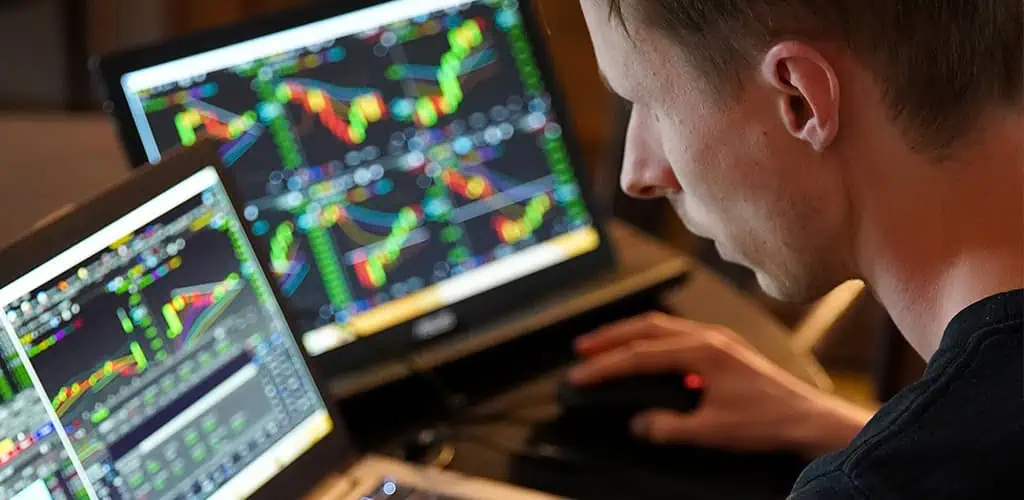
What Disciplined Trading Actually Looks Like
The numbers are hard to ignore. According to S&P Dow Jones Indices’ SPIVA Scorecard, which has tracked actively managed funds against their benchmarks for over 20 years, more than 80% of actively managed equity funds underperformed their benchmark index after fees over the 10-year period ending December 2024. Stretch that to 15 years and the picture is even starker, not a single fund category showed majority outperformance.
When you layer in the cost difference between active funds, which typically charge between 0.5% and over 2% annually, and passive index ETFs that often run between 0.03% and 0.25%, the drag on real returns compounds significantly over time. The maths tends to favour the passive investor.
For long term wealth building, the passive strategy works because it removes two of the biggest threats to investor returns: excessive fees and emotional decision-making. You’re not selling in a panic during a downturn or chasing a hot sector at the top of its cycle.
What Is Active Investing?
Active investing involves making deliberate, research-driven decisions about which assets to buy, when to buy them, and when to sell. This could mean selecting individual stocks, rotating between sectors, or using derivatives like futures contracts to gain specific market exposure.
Active investors and traders believe that with the right analysis and strategy, they can identify opportunities the market has not fully priced in, and generate returns above what a passive index fund would deliver.
Active Investing Approaches
There are several ways people pursue active investing:
- Stock picking: Researching and selecting individual companies based on fundamentals, growth prospects, or valuation
- Sector rotation: Moving capital between sectors (technology, healthcare, energy, etc.) based on economic cycles
- Growth investing: Targeting companies with strong earnings growth potential, accepting higher valuations in exchange for expected capital growth
- Day trading and futures trading: Taking short-term positions in liquid markets to profit from intraday or short-term price movements.
- Swing trading: Holding positions for days or weeks based on technical or fundamental signals
Active investing requires more time, more knowledge, and considerably more discipline than a passive buy-and-hold approach. The potential upside is genuine; but so is the potential downside.
Passive Investing vs Active Investing: The Real Comparison
When most people think about passive investing vs active investing, they frame it as a question of which delivers better returns. But that’s actually a secondary consideration. The primary question is: which approach fits your situation, your available time, and your realistic skill level?
Performance
The SPIVA data referenced earlier tells most of the story. Over long time horizons, passive investing has a structural advantage for the average person that is difficult to argue against.
What that data doesn’t capture, however, is the full picture. The SPIVA findings apply to institutional fund managers running diversified portfolios against broad market benchmarks. That is a different proposition entirely from a skilled individual trader operating in a specific, less efficient market. Futures markets, for example, offer structural advantages, exchange transparency, liquidity, and the ability to profit in both directions, that many retail traders have leveraged successfully outside the constraints that institutional managers face.
The lesson isn’t that active management can’t work. It’s that it needs to be the right kind of active, in the right market, with the right skillset behind it.
Fees and Costs
Passive funds are significantly cheaper. Lower fees mean more of your return stays in your account. This might seem like a small difference year to year, but compounded over 20 to 30 years it can represent tens of thousands of dollars.
Time and Skill Required
Passive investing requires very little ongoing attention. You set your allocation, automate contributions, and review your portfolio periodically. Active investing, particularly active trading, demands ongoing learning, strategy development, and psychological discipline.
Control and Flexibility
Active v passive investing ultimately comes down to control. Passive investors accept market returns. Active investors and traders seek to do better, but they also accept greater responsibility for outcomes.

Growth v Value Stocks: A Key Distinction for Active Investors
If you’re moving toward active investing, one of the first conceptual frameworks you’ll encounter is the distinction between growth and value stocks. This is one of the foundational debates in equity investing and worth understanding regardless of your approach.
Growth stocks are shares in companies expected to grow earnings and revenue significantly faster than the overall market. Think of companies expanding rapidly into new markets, disrupting existing industries, or scaling quickly. Investors in growth stocks are primarily chasing capital growth (the appreciation in share price rather than income from dividends). These stocks often trade at high valuations relative to current earnings because investors are pricing in future potential.
Value stocks are shares that appear under-priced relative to their fundamentals. These are often mature, established businesses with steady earnings that have fallen out of favour with the market. Value investors buy these stocks believing the market has overreacted and that the price will eventually correct upward.
Which Performs Better?
Historically, both have had periods of outperformance. Growth investing dominated throughout much of the 2010s as low interest rates made future earnings more valuable. Value investing has historically performed better over very long time horizons and in environments with rising interest rates.
For most investors, growth investing brings more excitement but also more volatility. Value investing requires patience and the ability to hold through periods when your thesis is being tested by the market.
Growth Investing and Capital Growth: Understanding the Long Game
Growth investing and capital growth more broadly sit at the heart of what most people are trying to achieve when they invest. Capital growth simply means the increase in value of your investment over time; as opposed to income returns like dividends or bond coupons.
The case for prioritising capital growth is straightforward: over long time periods, equities have delivered the highest capital growth of any major asset class. The challenge is managing the volatility that comes with that potential.
Long Term Wealth Building Through Grow
Long term wealth building through capital growth typically involves:
- Staying invested through market downturns rather than moving to cash
- Reinvesting dividends and distributions to compound returns
- Maintaining a diversified portfolio across sectors, geographies, and asset types
- Keeping costs low by minimising trading frequency and fees
- Avoiding emotional decisions triggered by short-term market noise
This shift in mindset from activity to quality is one of the biggest leaps a developing trader can make.
Can You Do Both? Active and Passive in the Same Portfolio
The active v passive investing debate is often presented as binary, but most experienced investors operate somewhere in the middle. A hybrid approach is not only practical for many people, it’s the most sensible structure.
A common model looks like this:
- Core passive allocation (60-80%): Low-cost index ETFs providing broad market exposure and serving as the foundation for long term wealth building
- Active satellite allocation (20-40%): Individual stock positions, sector ETFs, or active trading strategies where you have developed a genuine edge
This approach lets you benefit from the cost efficiency and simplicity of passive investing while still engaging actively with markets in a way that builds real skills and gives you direct exposure to specific opportunities.
Where Futures Trading Fits In
Many investors who start with a passive core eventually become curious about more active approaches. Futures trading represents one of the most transparent and accessible ways to trade actively. Futures markets are centrally exchange-traded, highly liquid, and available nearly 24 hours a day, making them well-suited for anyone wanting to build an active trading practice alongside a passive investment foundation.
Unlike buying and holding an index fund, a futures trader can profit from falling markets just as easily as rising ones, providing genuine portfolio flexibility regardless of market conditions.

Find a Trading Community
Accountability accelerates growth. When you trade alongside other people who are working through the same challenges, you’re less likely to drift from your plan. Whether that’s a live trading room, a mentor, or a structured course environment, external accountability reinforces internal discipline.
FAQ: Passive vs Active Investing
Is passive investing always better than active investing?
Not always. Passive investing outperforms the majority of active fund managers over long time horizons after fees. However, skilled individual traders operating in specific markets (particularly futures markets) can generate returns that exceed a passive index. The key variable is skill and discipline, not the approach itself.
What are the biggest risks of active investing?
The biggest risks are overtrading, emotional decision-making, and underestimating the learning curve. Many active investors and traders lose money in the early stages not because their strategy is wrong, but because they haven’t developed the discipline to execute it consistently. Risk management is equally as important as the strategy itself.
Is growth investing the same as active investing?
Not exactly. You can pursue growth investing passively by holding a growth-focused ETF, or actively by selecting individual growth stocks. Growth investing refers to the type of companies you target; active or passive describes how you manage your portfolio..
How much money do I need to start active trading?
This depends on the market. In futures trading, you can access major markets like the Micro E-mini S&P 500 (MES) with relatively modest capital. Many traders start with a few thousand dollars in a simulation account before committing real capital. Starting with a demo account until you can trade profitably and consistently is strongly recommended.
Can day trading replace long-term investing for building wealth?
These serve different functions. Long term wealth building through passive index investing is reliable, and comparatively low-effort. Active trading, including day trading, can generate significant income, but it requires ongoing skill development and carries more risk. A combination of both, with a passive core and an active component, is a sensible structure for many investors.
What is the best approach for a beginner investor?
Most financial educators recommend beginners start with a passive, low-cost index approach to build their foundational wealth. Simultaneously, if you’re interested in active trading, invest time in education before committing significant capital. Learning to trade in a structured environment dramatically reduces the cost of mistakes.
Choosing the Right Path for Your Goals
The passive vs active investing debate rarely has a single correct answer. What matters is your goals, your timeline, your available time, and your willingness to develop real skills.
If you’re looking to build wealth steadily over decades with minimal effort, a passive index strategy is hard to beat. If you’re motivated to learn, want to actively engage with markets, and are prepared to put in the work, active trading can offer returns and flexibility that passive funds simply cannot match.
The smartest investors don’t treat this as an either/or choice. They build a solid passive foundation, then develop an active edge where they have genuine interest and capability.
If active trading is something you’re serious about exploring, the difference between people who succeed and those who don’t almost always comes down to education and structure. Trading futures on regulated exchanges, with proper risk management and a clear strategy, is one of the most transparent and accessible forms of active market participation available to retail investors.
Ready to explore what active trading looks like in practice? Attend a free IDTA workshop and see professional futures traders at work in real time. Register your place at the next trading workshop.

Cameron has over 10 years experience in teaching people how to day trade the futures markets. He has feature alongside the CME Group, and NinjaTrader, and has been published in multiple magazines, including leading trading magazine Your Trading Edge magazine.