How to Learn to Trade in Australia
To learn to trade in Australia, start with how one market works, practise one strategy on a simulator until your results are steady, and learn from an ASIC regulated educator who trades live with you. Most people need a few months of study and practice before trading real money. The part that matters most is learning to control risk. Picking winners matters less.
This guide covers what to learn first, the ways you can learn, how long it takes, and what to look for in an educator. It’s written by the team at the International Day Trading Academy (IDTA), an Australian futures trading educator led by founder Cameron Buchanan.
About 15 mins, on demand. Add your details, watch straight away.
“I was looking at all the videos on YouTube and trying to self-teach… I still couldn’t work out where I was going wrong.”
Beaudie S, fitter and turner, QLD
IDTA Are Trusted By:



How to learn to trade: the short path
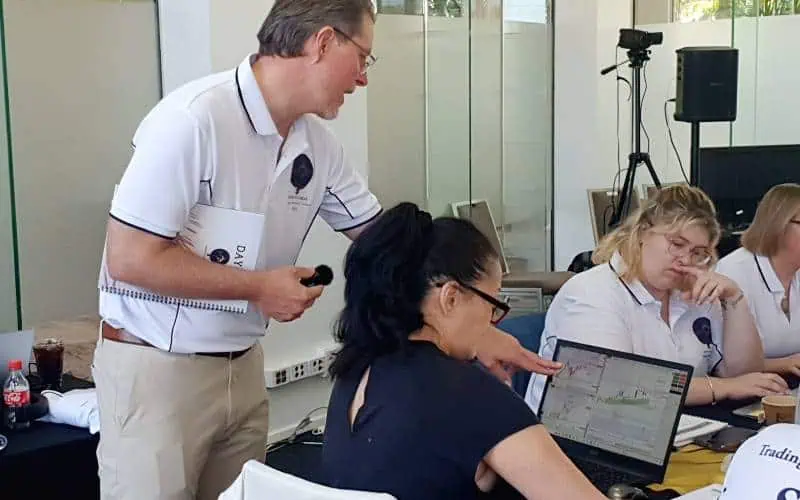
Learning to trade is a skill you build in stages. Here’s the path we take our own members through.
- Learn how the market works. Before any strategy, understand what you’re trading. For us that’s futures: what a futures contract is, how margin works, and when the market is open.
- Learn one strategy properly. Pick one approach with clear rules for when to enter, when to exit and how much to risk. Jumping between strategies is one of the most common reasons people stall.
- Practise on a simulator. Trade the strategy with virtual money in live market conditions until you can follow your rules without thinking about them.
- Write a trading plan and keep a journal. A trading plan sets your limits before you trade. A trading journal shows whether you’re sticking to them.
- Move to a small live account, slowly. Only once your simulated results are consistent, and only with money you can afford to lose.
What to learn first
New traders often start with chart patterns and indicators. We’d suggest starting somewhere else.
The market you’ll trade
Each market behaves differently. Shares, forex, CFDs and futures all have their own costs, hours and rules. At IDTA we teach futures, mainly the NASDAQ and S&P 500 index futures, because they trade on regulated exchanges with transparent pricing. Our guide to trading futures covers the basics.
Risk before reward
This is the part most self-taught traders skip. Markets carry risk you can’t control, like a sudden news move. A large part of your outcome comes from the risk you can control: how much you risk on each trade, where you exit when you’re wrong, and how big your winners are compared with your losers.
When your winning trades are larger than your losing ones, you don’t need to be right most of the time. That shift, from trying to predict the market to managing your risk, is the core of how we teach.
Your own psychology
Fear and impatience can undo a good strategy. Learning to follow your rules when a trade goes against you is a skill in itself, and it’s one you can practise. Our article on trading psychology goes into this further.
Ways to learn trading in Australia
There are four main ways to learn to trade. Each suits a different kind of learner.
Most people we meet have tried teaching themselves first. The common problem is a patchwork of strategies from different places that don’t fit together. Whichever route you choose, learn one consistent method from one source before you add anything else.
| Way to learn | What you get | What to watch for |
|---|---|---|
| Teaching yourself (books, videos, forums) | Low cost, your own pace | Mixed advice from many sources, no feedback, easy to pick up bad habits |
| Broker education hubs | Free articles and webinars about the broker’s platform | Usually general, and often geared to products like CFDs |
| Structured courses | A set curriculum from start to finish | Some stop when the videos end, with little help when you start trading |
| Course plus live support and mentoring | Structure, plus feedback while you practise | Costs more, so check the educator’s licence and track record of support |
See how our method works in Cam’s free 15-minute training
How long does it take to learn day trading?
It depends on how much time you give it, but here’s a realistic guide based on our own courses.
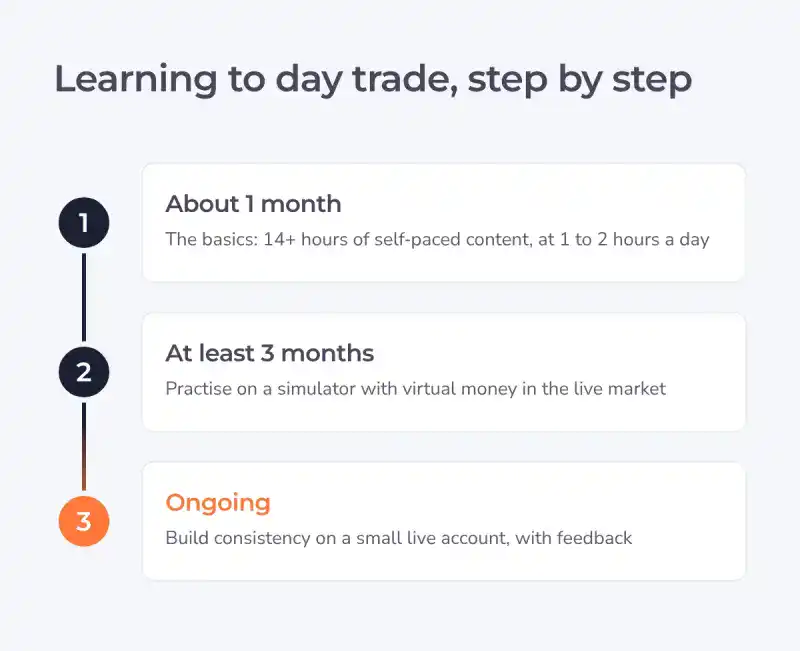
- Learning the basics: our Futures Essentials course has over 14 hours of self-paced content. At 1 to 2 hours a day, most people finish it in about a month, however it differs from person to person.
- Practising on a simulator: we recommend at least 3 months of simulated trading before you trade real money.
- Building consistency: this keeps going well after you start trading live. Most of your learning happens here, with feedback on real trades.
Treat any course that promises results in a few days or weeks with caution.
Practise without risking your own money
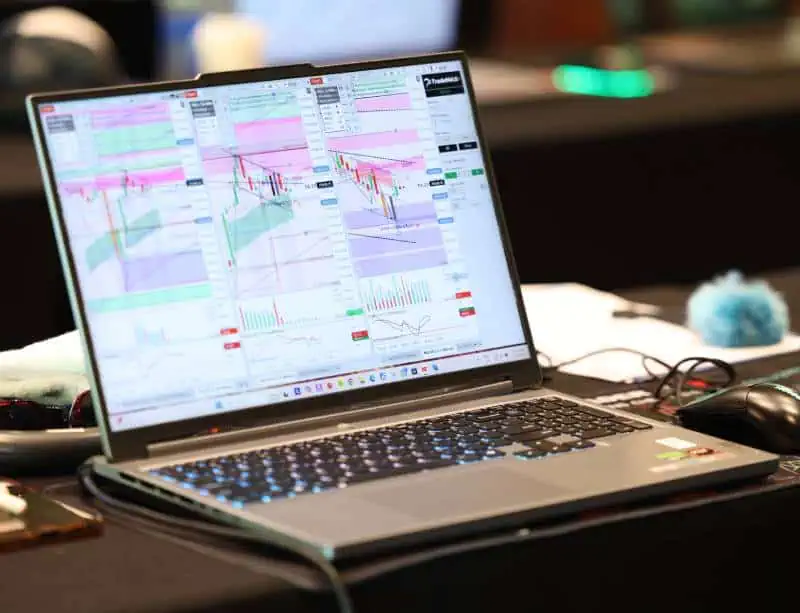
A trading simulator lets you place trades in the live market using virtual funds. You see real prices and real speed, with none of your own money at stake.
Use the simulator the way you’d trade a real account. Use the same position size, follow the same rules and keep the same journal. If you’d treat it as a game, the habits you build won’t carry over. Move to a live account only once your simulated results are steady over several weeks, and start small when you do.
Why IDTA teaches futures
We teach futures because we think they’re a fairer market for a day trader to learn on.
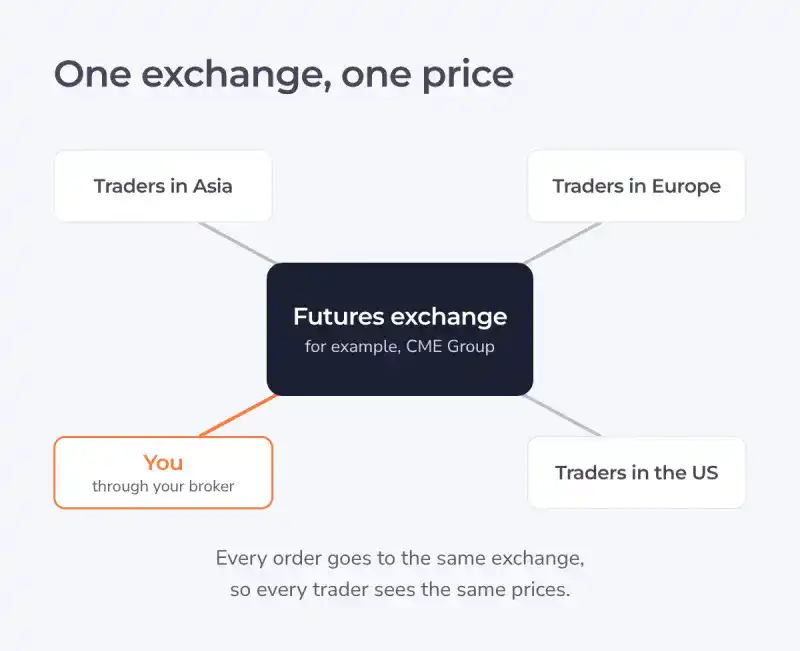
- Regulated exchanges: futures trade on exchanges like CME Group, so every trader sees the same prices.
- Long trading hours: index futures trade almost around the clock on weekdays. From Australia you can trade the Asian, European or US sessions, including in the evening.
- Smaller contract sizes: micro contracts let new traders start with smaller positions.
- Leverage cuts both ways: futures are leveraged, so a loss can be larger than the margin you put up. That’s the reality of the market, and it’s why risk management comes first in everything we teach. Members learn to set their exit and position size before they place a trade.
If you’ve traded CFDs before, our comparison of CFDs and futures explains the differences. For the Australian rules, brokers and trading hours, see futures trading in Australia.
Learning to trade alongside full-time work
Most of our members learn while working full time, many in FIFO roles, trades or their own business. Day trading doesn’t have to mean sitting at a screen all day.
A typical session in our Live Trading Room runs around 60 to 120 minutes, and the sessions follow the Asian, European and US market opens. That means you can often learn and practise outside normal working hours. The key is to pick one session that fits your week and stick to it, rather than trading whenever you have a spare moment.
What to look for in a trading educator
The right educator can save you a lot of time and money. Before you sign up anywhere, check these points.
Are they licensed? Look the educator up on ASIC’s professional register. IDTA (ACN 165 005 550) is a Corporate Authorised Representative (CAR 001250922) of Beyond Capital Asset Management Pty Ltd (AFSL 484045) for futures trading education.
Do they trade live in front of you? An educator who places real trades in real time, with no hindsight, shows you how the method holds up.
Is there support after the course? Ask what help you get when you start practising: mentoring, live sessions, a member community.
Do they teach one clear method? You want a consistent strategy with rules, not a library of tips.
Do they avoid income promises? A credible educator talks about process and risk. Be wary of anyone who leads with income or lifestyle claims.
For one-on-one help, our trading mentor program pairs members with an experienced trader. Members who’ve finished Essentials can go further with the advanced course.
Frequently asked questions
Can I learn to trade on my own?
You can, and plenty of people start that way. The difficulty is getting feedback. On your own it’s hard to tell whether a loss came from the strategy, the market or a mistake you made. A structured course with live support can shorten that learning curve.
Is learning to trade hard?
It takes time and discipline, and losing trades are part of it for everyone. Where new traders tend to come unstuck is skipping risk management or switching strategies too often, especially when they’re learning on their own. Learning one method, practising it on a simulator and getting feedback as you go is designed to help you avoid those mistakes.
Is learning to trade worth it?
It depends on what you want from it and how much time you can give it. Trading is a skill you can keep and build on, but it takes months of learning and practice, and there’s no guarantee of results. It tends to suit people who want to learn a clear process and stick to it, and who are happy to practise on a simulator before risking any money. If you’re after quick income, it’s probably not the right fit.
How much money do I need to start learning?
You don’t need any trading capital to start learning, because the early stages happen on a simulator. When you’re ready to trade live, the amount depends on the market and contract size. Our guide on how much money you need to day trade covers this for futures.
Can I learn to trade online?
Yes. IDTA’s courses, live trading rooms and mentoring all run online, so you can learn from anywhere in Australia.
What’s the best way to learn day trading?
Learn one strategy from one consistent source, practise it on a simulator in live market conditions, and get feedback from experienced traders as you go. Keep a journal so you can see what’s working.
Is day trading legal in Australia?
Yes. Day trading is legal in Australia. Futures trade on regulated exchanges, and anyone offering financial product advice or education about them should be licensed or authorised under an Australian Financial Services Licence.
Start with the free training
Cam’s free training walks through how our method works and what it takes to learn to trade properly. It runs for about 15 minutes and it’s on demand, so you can watch it straight away.
Watch the free training About 15 minutes, on demand. Add your details and watch straight away.
See how our method works in Cam’s free 15-minute training
